Login
Join Free
Categories
My Orders
Wish
Cart
0m³/0m³

English
English
 Русский язык
 中文
中文
What Makes a Toy Popular With Kids? 9 Key Factors
2026-09-14 11:25:26
Why do some toys become instant favorites while others are ignored after a few minutes? A toy can have bright packaging, an attractive character, or a low price and still fail to hold a child's attention. Meanwhile, a relatively simple toy can become the one children repeatedly ask for, play with together, and remember long after they first see it.
So, what makes a toy popular with kids?
The answer is rarely just one feature. Popular toys tend to combine several forms of appeal: they invite children to do something immediately, provide satisfying feedback, allow repetition without becoming boring, and give children opportunities to imagine, discover, collect, compete, or share.
For anyone involved in selecting toys for a store, product assortment, gift range, or seasonal buying program, understanding these characteristics can be more useful than simply following the latest toy trend.
9 Factors That Can Make a Toy Popular With Kids
1. The Toy Gives Kids Something to Do Immediately
One of the strongest characteristics of a popular toy is a clear invitation to play.
Children do not necessarily need a complicated explanation before they understand what to do. A toy that can be squeezed, stacked, pushed, pulled, transformed, launched, assembled, sorted, or manipulated can create an immediate connection between the child and the product.
This is especially important when a toy is first discovered in a store or through an online product image. If its basic play action is easy to understand, the child can quickly imagine using it.
That does not mean every successful toy needs to be extremely simple. More advanced toys can introduce rules, construction, storytelling, or multiple stages of play. The important point is that the first interaction should give children a reason to continue.
For toy selection, a useful question is:
What does the child actually get to do with this toy?
If the answer is obvious and appealing, the product has a stronger starting point.
2. Satisfying Sensory Feedback Encourages Repetition
Children often repeat actions because the action itself feels satisfying.
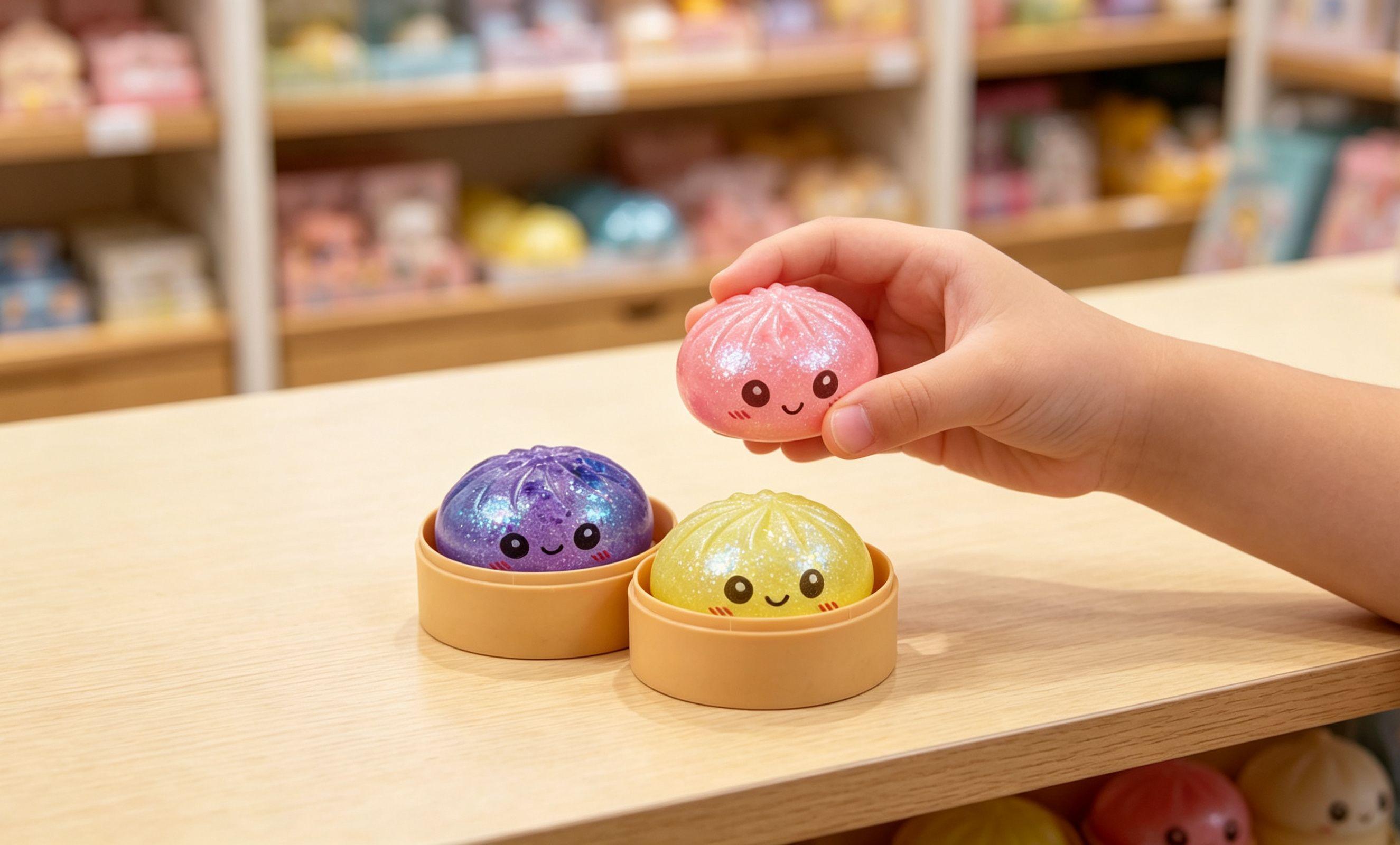
Think about the appeal of squeezing a soft toy, clicking a mechanism, spinning an object, fitting pieces together, creating a sound, watching something move, or seeing a structure change. These experiences provide immediate feedback.
Sensory feedback can make a toy engaging even when the basic action is simple.
This is one reason tactile toys, fidget products, squishy toys, construction toys, and toys with mechanical movement can maintain attention. The child performs an action and receives a response almost instantly.
The feedback does not have to be electronic. In fact, many popular play experiences rely on completely mechanical or physical interactions.
For product selection, consider whether the toy creates a satisfying connection between action and response.
A child pushes something and it moves.
A child builds something and it stands.
A child squeezes something and it changes shape.
A child completes something and sees the result.
That simple loop can be powerful.
3. Kids Like Toys That Can Be Played With More Than Oce
A toy may attract attention once without becoming a favorite.
Longer-lasting appeal usually comes from the possibility of repeating the experience in a slightly different way.
Building toys are a clear example. The same pieces can produce different structures. Pretend-play toys can support different stories. Collectible products can create a continuing reason to explore new characters or designs. Games can become more interesting as children understand the rules better.
This is important because popularity is not only about the first impression. A toy that survives the first few play sessions has a stronger chance of becoming part of a child's regular play routine.
When evaluating products, ask:
Can children create a different experience the next time they use it?
If the answer is yes, the product may have more play depth than its appearance initially suggests.
4. A Popular Toy Often Creates a Sense of Discovery
Children naturally respond to the feeling that there is something left to discover.
This can happen through hidden details, surprise elements, different configurations, unexpected movement, collectible characters, mystery formats, or multiple ways to use the same product.
Importantly, discovery does not always require a surprise package.
A toy can create discovery simply because children gradually figure out how it works.
This is particularly useful for toys with mechanisms, puzzles, building components, transformations, or open-ended play. The child becomes part of the discovery process instead of simply watching the toy perform an action.
For a product buyer, this creates an important distinction between a toy that shows everything immediately and one that gives children something to explore.
The second type may encourage longer engagement.
5. Social Play Can Turn a Toy Into a Shared Experience
Some toys become more attractive when children can play with other people.
A product can encourage cooperation, competition, role-playing, trading, building together, or simply showing something to friends. These social elements can significantly expand the experience beyond the physical toy itself.
For example, a toy may become more interesting when one child challenges another, when several children contribute to the same construction, or when children create their own rules for playing.
Social play also gives children something to talk about.
A toy that becomes part of a conversation can have a different kind of popularity from a toy that is only used privately.
This is one reason toy selection should not focus entirely on individual features. Consider the environment in which the product will actually be used.
Can two children use it together?
Can siblings share it?
Can children demonstrate it to friends?
Can it become part of pretend play?
These questions reveal additional forms of value.
6. Children Often Respond to Toys That Reflect Their Interests
A toy becomes easier to understand when it connects with something a child already finds interesting.
Animals, vehicles, fantasy characters, construction, role play, sports, miniature worlds, science, music, dolls, crafts, and sensory experiences can all provide familiar starting points.
However, popularity is not always created by the theme alone.
The strongest products often combine a recognizable interest with a compelling play action.
For example, a vehicle theme becomes more engaging when children can race, transform, build, or control the vehicle. A doll becomes more engaging when children can create stories around it. A building set becomes more engaging when the child can construct something and then use it in imaginative play.
In other words:
The theme gets attention. The play experience gives children a reason to stay.
That distinction is useful when comparing products that look similar on a catalog page.
7. The Right Level of Challenge Matters
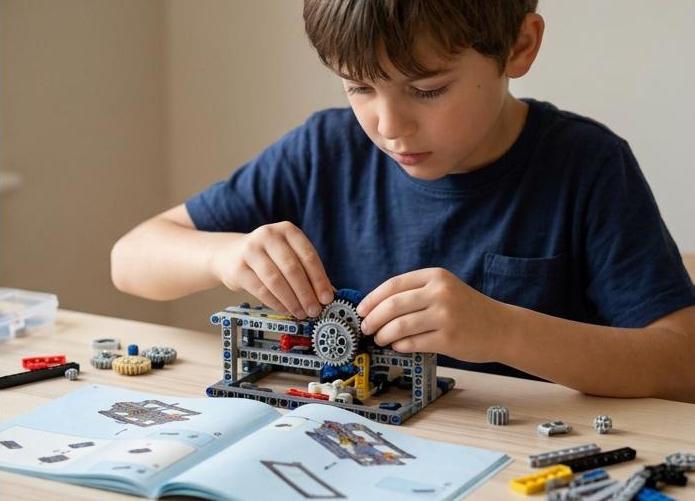
A toy that is too easy can become boring quickly. A toy that is too difficult can become frustrating.
Popular toys often sit somewhere between the two.
Children should be able to make progress, but there should still be something to figure out. This can be especially important for puzzles, construction sets, games, craft toys, and skill-based products.
The ideal level of difficulty also depends on age.
A product designed for younger children may need a very clear and accessible play action. Older children may enjoy more complex rules, detailed construction, strategy, or problem-solving.
For businesses selecting products, age recommendations are therefore more than a label on packaging. They help determine whether the product's challenge level matches its intended audience.
A useful question is:
Does this toy give the child a realistic chance to succeed while still leaving room to improve?
That balance can contribute significantly to repeat play.
8. Visual Appeal Still Matters — But It Is Only the Beginning
Color, shape, character design, size, packaging, and unusual details can determine whether a child notices a toy in the first place.
Visual appeal is particularly important when products are displayed together. When dozens of products compete for attention, a distinctive shape or recognizable design can make a product easier to notice.
But visual appeal alone does not guarantee lasting popularity.
A toy can look exciting on a shelf and still lose attention quickly if the actual play experience is weak.
This is why product evaluation should move beyond the product photo.
Look at the interaction.
Look at the materials.
Look at the mechanism.
Look at what children can actually do with the product.
Look at whether the experience matches what the packaging suggests.
The strongest products tend to connect the first visual impression with a satisfying play experience.
9. Collectability Can Create a Reason to Come Back
Some toys become popular because one product naturally leads to another.
Different characters, colors, styles, accessories, themes, or variations can create a collection that grows over time.
Collectability works because it introduces progression. Instead of asking only, "Do I want this toy?", children may begin asking, "Which one do I want next?"
For businesses, this can also make product selection more interesting because a related group of products may create a stronger display than a single isolated item.
However, collectability works best when the individual products are already appealing. A large number of variations cannot compensate for a weak core play experience.
The product should still be enjoyable on its own.
What This Means for Toy Selection
Understanding what makes a toy popular with kids can change the way products are evaluated.
Instead of asking only whether a toy is trendy, consider several practical questions:
-
Is the play action immediately understandable?
-
Does the toy provide satisfying feedback?
-
Can children use it repeatedly?
-
Does it encourage discovery?
-
Can it support social or imaginative play?
-
Does it connect with a recognizable interest?
-
Is the challenge appropriate for the intended age?
-
Does the product stand out visually?
-
Can a collection or product series add another reason to engage?
No single factor guarantees popularity. Children's preferences vary by age, market, culture, and individual interests.
The more useful approach is to look for combinations.
A simple toy with excellent sensory feedback may outperform a complicated product. A building set with strong open-ended play may have more lasting value than a toy with only one fixed function. A collectible product may attract attention, but its individual designs still need to be appealing.
For businesses, this means product selection should balance first impression, play value, repeat use, and market relevance.
Source Popular Toys With ZHORYA
A toy becomes popular when it gives children a reason to interact, explore, imagine, and play again. Finding products that offer these qualities requires a wide range of choices and reliable sourcing. ZHORYA can help businesses explore suitable options through:
- 2M+ toy SKUs covering a wide range of categories, styles, and play experiences.
- OEM & ODM services for customized products, packaging, logos, and designs.
- Ready to Ship toys featuring popular and bestselling styles for faster product selection.
Looking for a wholesale toy supplier? Contact ZHORYA to explore toy products that can capture children's interest and keep them engaged.

Conclusion
What makes a toy popular with kids is rarely just its color, character, or packaging.
Popular toys usually give children a reason to interact, discover, repeat, imagine, share, collect, or improve. The strongest products often combine several of these qualities into one simple play experience.
For businesses selecting toys, looking beyond the initial appearance can reveal why some products have stronger potential than others. Instead of asking only whether a toy is currently popular, consider what makes children want to pick it up — and what gives them a reason to play with it again.
Get Your Free Quote
We will reply within 24 hours.