Login
Join Free
Categories
My Orders
Wish
Cart
0m³/0m³

English
English
 Русский язык
 中文
中文
Why Traditional Plush Dolls Still Sell in 2026
2026-03-30 09:40:15
In a market where toy trends change rapidly, it is easy to assume that only viral or collectible products drive sales. However, data from retail buyers, distributors, and gift-focused stores suggests a different reality. While trend-driven toys may generate short-term spikes, a large portion of stable revenue still comes from categories that are predictable, repeatable, and widely accepted.
One of the most overlooked yet consistently performing categories is traditional plush dolls. For businesses sourcing wholesale plush dolls, understanding why these products continue to sell—and how to select them correctly—can directly impact long-term performance.
The Difference Between "Trending" and "Stable" Toy Categories
Before looking at plush dolls specifically, it is important to separate two fundamentally different product strategies.
Trend-driven toys rely on novelty. They often gain attention quickly through social media, character licensing, or seasonal demand. However, their lifecycle is usually short. Once interest fades, the same products become difficult to move without discounts.
In contrast, stable categories are not dependent on trends. They are built around consistent demand patterns. These products may not generate sudden spikes, but they provide predictable turnover and are easier to restock without major risk.
Traditional plush dolls clearly fall into the second category.
For buyers focused on building a reliable product mix rather than chasing short-term trends, this distinction matters more than it initially appears.
Why Plush Dolls Continue to Perform Across Markets
There are several structural reasons why plush dolls remain relevant across different retail environments.
First, they are easy for customers to understand. A soft doll with a friendly face and simple outfit does not require explanation. This reduces hesitation at the point of purchase, especially in physical retail settings.
Second, plush dolls are not tied to a specific theme or license. This makes them more flexible across regions and customer groups. A single design can work in a gift shop, a toy store, or a supermarket environment without needing localization.
Third, they have a natural positioning as gift items. Compared to generic plush toys, dolls with clothing and character features tend to be perceived as more "complete" products. This increases their suitability for occasions such as birthdays, holidays, or impulse gift purchases.
For buyers sourcing plush dolls, these factors translate into a lower risk profile compared to more specialized or trend-dependent products.
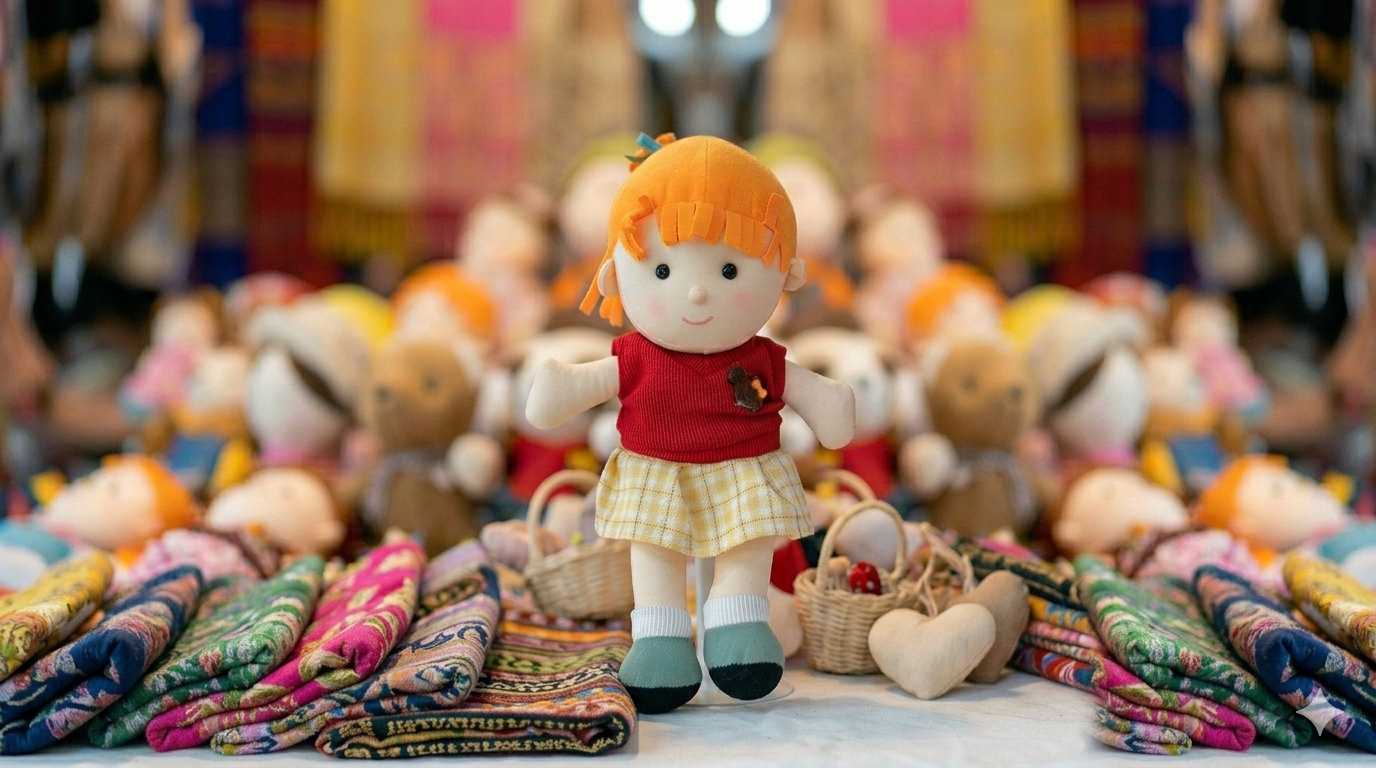
What Actually Drives Sales in Plush Doll Retail
A common mistake in sourcing is focusing too much on catalog appearance instead of real retail performance. Plush dolls that look detailed or unique in images do not always sell better.
Based on feedback from buyers, three factors consistently influence sales:
1. Facial Simplicity and Expression
Overly complex or highly stylized faces can limit audience appeal. Simpler designs with neutral or friendly expressions tend to perform better across age groups.
This is particularly important for bulk buyers targeting general retail rather than niche markets.
2. Color and Outfit Balance
Bright colors attract attention, but excessive contrast can reduce perceived quality. Successful plush dolls usually combine soft base tones with a few contrasting elements.
Outfits also play a role. They should add value without making the product look overly complicated or fragile.
3. Softness and Handling
Unlike display-oriented products, plush dolls are often handled before purchase. If the material feels rough or inconsistent, conversion rates drop quickly.
For stuffed dolls, tactile experience is often as important as visual appeal.
Material and Construction: What Buyers Should Check
When evaluating plush dolls, material selection is not just a quality issue—it directly affects pricing, durability, and positioning.
Key aspects to review include:
- Fabric type: Short plush and cotton-based fabrics are common for children’s dolls due to their softness and durability.
- Filling material: PP cotton remains the standard due to its balance of cost and resilience.
- Stitching quality: Weak stitching leads to returns, especially in higher-volume retail channels.
- Accessory attachment: Clothing and decorative elements should be securely fixed to avoid safety concerns.
These factors may seem basic, but they are often where inconsistencies occur between samples and bulk production.
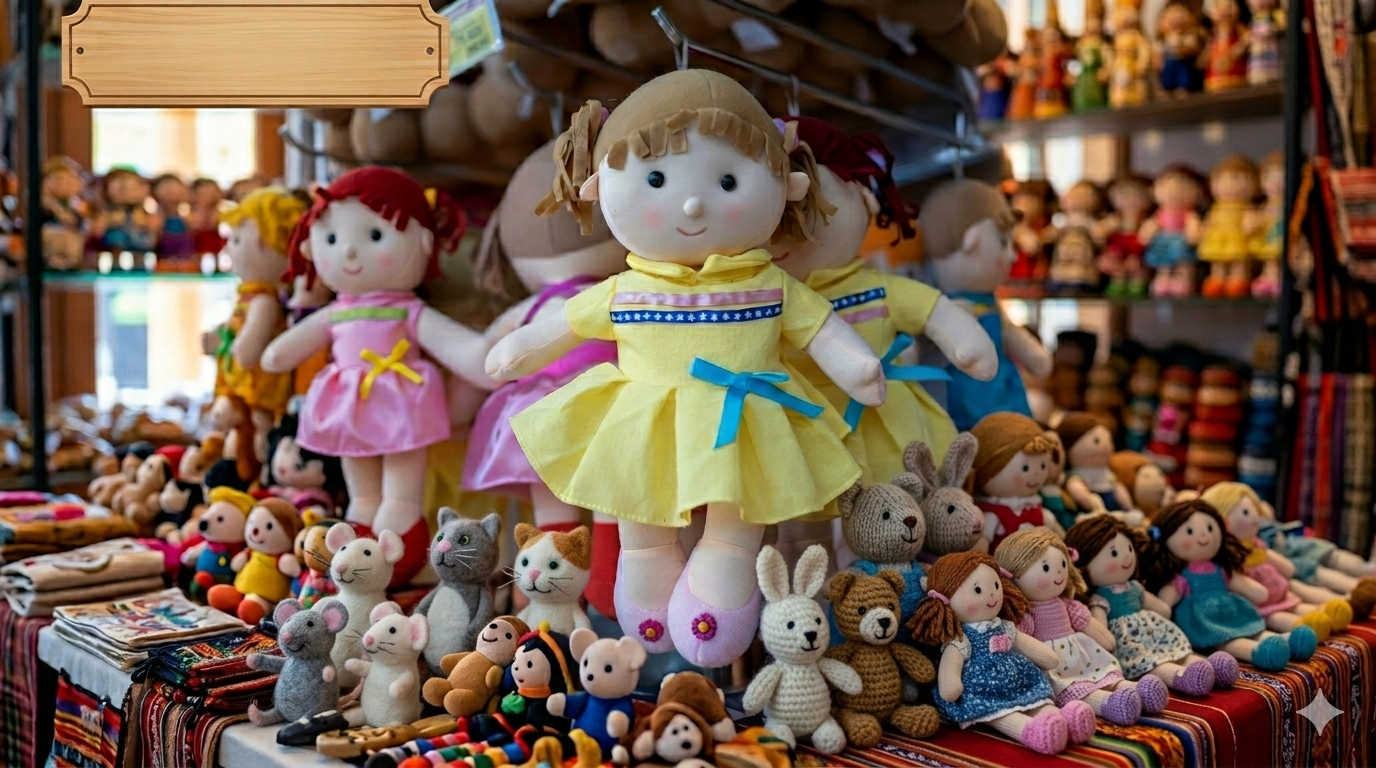
Pricing Strategy: Why Plush Dolls Offer Flexibility
One advantage of plush dolls compared to many other toy categories is their pricing flexibility.
Because the perceived value is influenced by visual design (especially clothing and character elements), small changes in design can support different price points without significantly increasing production cost.
For example:
- A basic rag doll can serve as an entry-level product for high-volume sales
- A more detailed doll with layered clothing can be positioned as a mid-range or gift item
This flexibility allows buyers to build a tiered product structure instead of relying on a single price level.
Common Sourcing Mistakes to Avoid
Even experienced buyers make avoidable mistakes when sourcing plush dolls.
One of the most common is over-prioritizing design uniqueness. While differentiation is important, excessive uniqueness can limit repeat orders if the product does not scale well.
Another issue is ignoring consistency across batches. A product that looks good in a sample but varies in bulk production can create long-term problems for distributors.
Finally, some buyers underestimate the importance of packaging. For gift-oriented products, packaging can influence perceived value almost as much as the product itself.
How to Approach Plush Doll Sourcing
A more effective approach is to treat plush dolls as a structured category rather than a one-off purchase.
This means:
- Selecting a core range of stable designs
- Testing small variations in color or outfit
- Monitoring which versions reorder consistently
- Expanding based on proven demand rather than assumptions
For businesses sourcing stuffed dolls, this method reduces risk and improves long-term performance.
Final Thoughts
Traditional plush dolls may not generate the same level of attention as trending toys, but they remain one of the most dependable categories in the toy market. Their strength lies in consistency, broad appeal, and adaptability across different retail environments.
For buyers focused on stability rather than speculation, investing in the right type of plush dolls is less about finding the most unique design and more about selecting products that can sell repeatedly without constant adjustment.
Zhorya, based in China, supports this approach by offering a wide range of plush dolls designed for bulk purchasing and consistent quality. By focusing on practical designs, attention to materials and construction, and a variety of price points, Zhorya helps buyers build a stable product mix that performs across gift shops, toy stores, and general retail outlets. Choosing a supplier like Zhorya ensures that plush doll sourcing is less about speculation and more about building dependable, long-term sales success.