Login
Join Free
Categories
My Orders
Wish
Cart
0m³/0m³

English
English
 Русский язык
 中文
中文
Food-Inspired Toys: Popular Designs and Ideas to Explore
2026-09-11 09:02:13
A stick of butter. A dumpling.
These may not be the first foods that come to mind when you think about toys, but both have found their way into the world of squishies. And they are not the only foods being turned into toys. From fruit and desserts to drinks, snacks and bakery foods, familiar foods can inspire all kinds of toy designs.
The same food can also appear in very different forms. A donut might be a miniature, a soft squishy, a plush character or part of a pretend-play set. A dessert can become a collectible, while a drink can be turned into a novelty toy.
If you are exploring food-themed toys for an existing product range or looking for new formats within this category, there are plenty of directions to explore. So, what falls under Food-Inspired Toys, and what kinds of products can you find in this category? Let's take a closer look.
What Are Food-Inspired Toys?
Food-inspired toys are products that take their appearance, theme or character concept from food.
Some are direct representations of familiar foods, such as miniature fruit, toy cakes or pretend hamburgers. Others take more creative inspiration from food, turning a donut into a character, a drink into a plush toy or a dessert into a collectible.
This makes Food-Inspired Toys a broad category rather than one specific type of toy.
They can overlap with several other categories, including:
-
Pretend-play toys
-
Miniature toys
-
Squishy and sensory toys
-
Plush toys
-
Collectibles
-
Novelty toys
-
Character toys
-
Playsets and accessories
The food theme is what connects these different products.
The Main Types of Food-Inspired Toys
Miniature Food Toys
Miniature food toys reproduce familiar foods in small sizes.
Common examples include fruits, cakes, donuts, bread, drinks, pizza, burgers and other snacks. They may be sold as individual miniatures or used as accessories for dolls, miniature scenes and playsets.
Because many foods have recognizable shapes and colors, they can remain identifiable even when made very small. This makes miniature food a natural fit for compact toys and collectible-style products.
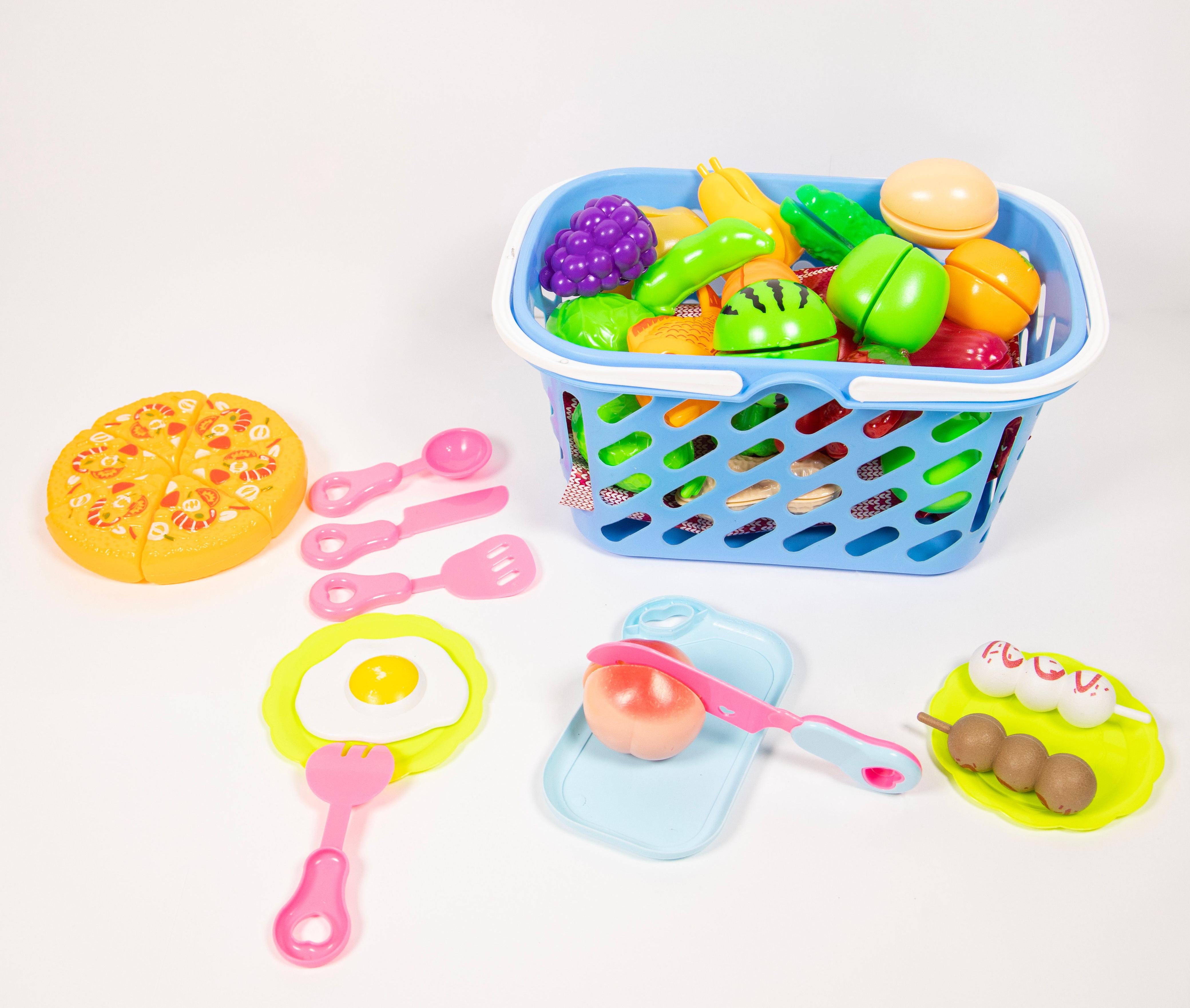
Pretend Food Toys
Pretend food is the more traditional side of the category.
These toys can represent ingredients, prepared dishes, desserts, drinks and other food items used in pretend kitchens, cafés, grocery stores and restaurant play.
Unlike food collectibles, their main purpose is usually to become part of a larger play scenario. A toy food set may therefore contain several different items that can be combined during play.
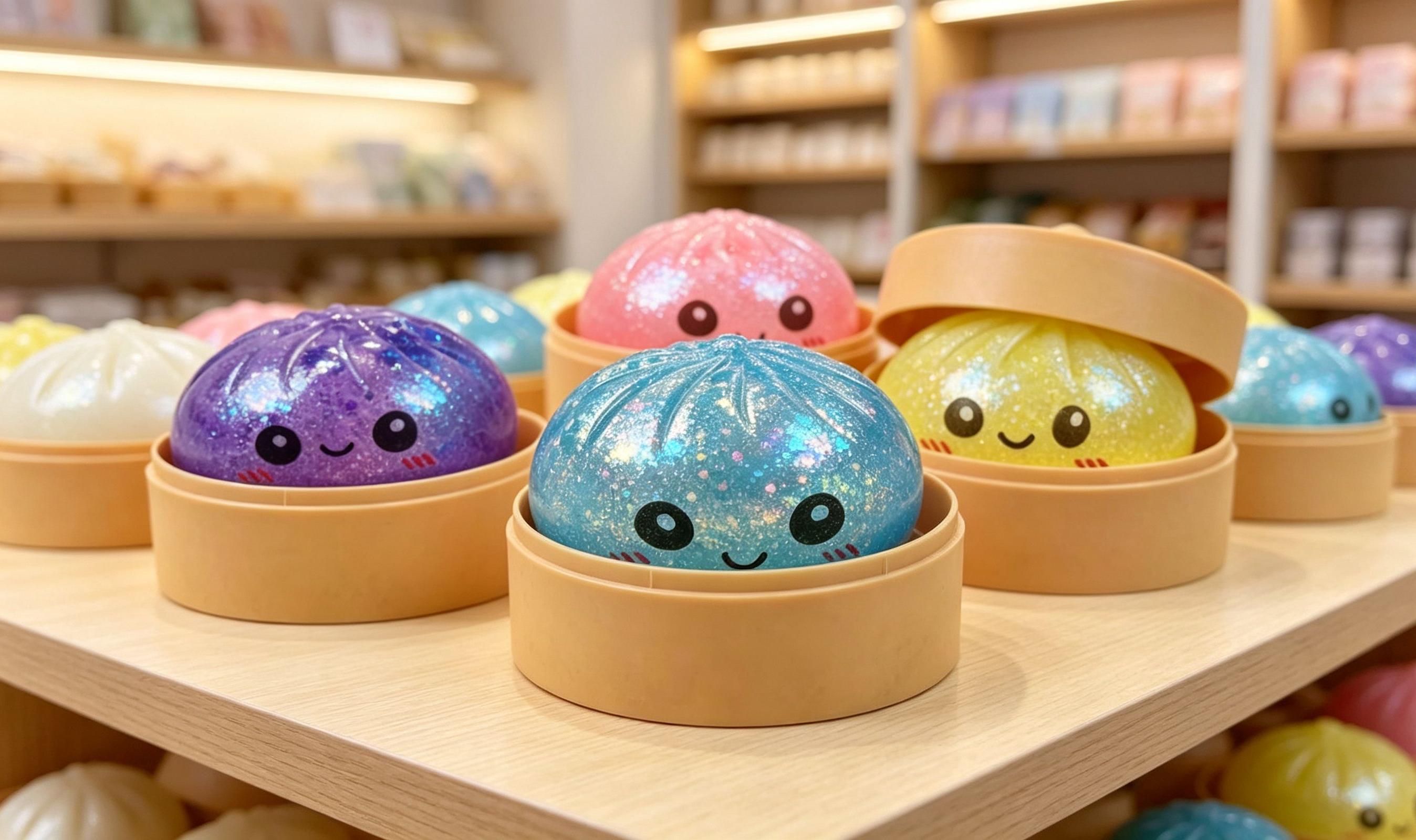
Food Squishies
Food squishies combine recognizable food shapes with a soft, squeezable texture.
Popular design directions include desserts, fruit, bread, dumplings, drinks and snacks. Some products focus on realistic food details, while others use exaggerated shapes, bright colors or cute facial expressions.
The combination works because the food shape makes the product immediately recognizable, while the soft material provides a sensory experience that ordinary miniature food does not.
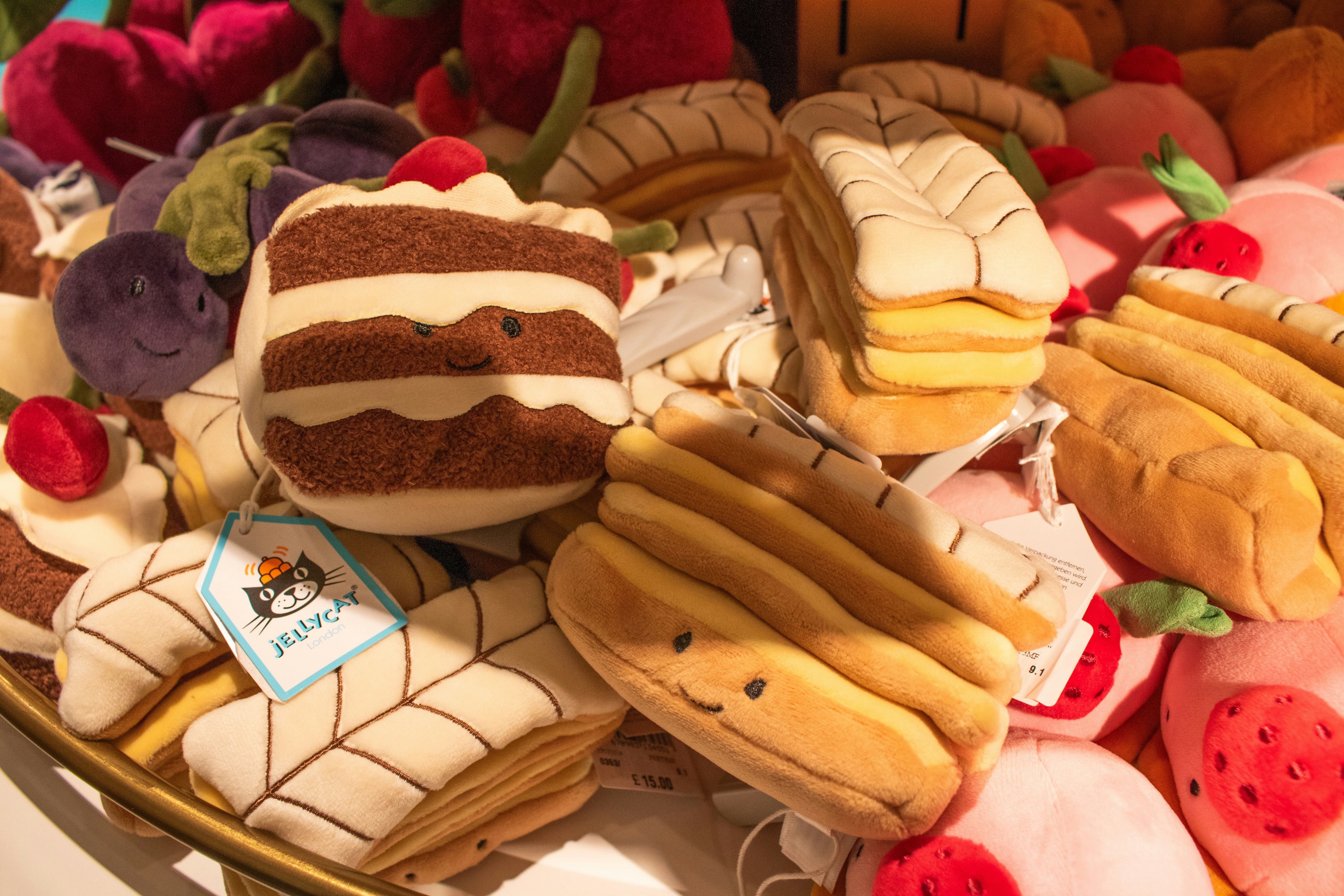
Food-Themed Plush Toys
Food can also be turned into a soft character.
Instead of simply making a plush version of a real food item, designers can give the food a face, expression or character-like appearance.
Fruit, desserts, drinks and snacks can all become plush characters. The recognizable food shape remains, but softness and character design become part of the product.
Food Collectibles
Food is also a natural theme for small collectibles.
A collection might include different desserts, fruits, snacks or drinks, with each piece having its own shape while sharing a common theme.
Food provides a particularly large pool of possible designs, so a collection can include many different products without abandoning its overall identity.
Some food-themed collectibles can also use mystery or surprise packaging, adding another layer to the collecting experience.
Food-Themed Novelty Toys
Food can also be used as the visual theme of novelty toys.
In these products, the food shape may be combined with a simple function, movement, sound, squeeze feature or other unexpected element.
The food makes the product easy to recognize, while the added feature gives it a different purpose from ordinary toy food.
What Foods Are Commonly Used in Toys?
The range of possible food themes is much wider than the usual hamburger or ice cream.
Fruits and Vegetables
Strawberries, bananas, apples, watermelons, oranges and other fruits have clear silhouettes and recognizable colors.
They can work as miniatures, plush, squishies, characters and other toy formats.
Desserts and Sweets
Ice cream, donuts, cakes, cupcakes, cookies and puddings offer plenty of visual variety.
Toppings, layers, frosting, fillings and decorative details can make each design look different even when the products belong to the same dessert theme.
Bakery Foods
Bread, croissants, pastries and other baked goods are another common direction.
Their familiar shapes also make them suitable for miniature and soft toy formats.
Drinks
Drinks introduce another group of recognizable forms, including cups, bottles, cans and cartons.
They can be represented as miniature food accessories, plush characters, collectibles or novelty toys.
Snacks and Fast Food
Pizza, burgers, fries, sandwiches and similar foods have strong visual identities and can work across pretend play, miniatures, collectibles and novelty products.
Regional Foods
Food-inspired toys do not have to rely only on globally familiar foods.
Dumplings, noodles, rice-based foods, traditional desserts and other regional foods can provide different shapes and visual styles.
This gives the category more room to develop beyond the same familiar food subjects.
Food-Inspired Toys Can Be Cute, Realistic or Completely Stylized
There is no single appearance that defines a food-inspired toy.
Some products aim for a miniature version of the real food. Others deliberately make the product much cuter or more exaggerated.
A food toy may use:
-
Realistic colors and textures
-
Simplified shapes
-
Oversized proportions
-
Bright or unusual colors
-
Facial expressions
-
Character features
-
Very small miniature details
For example, a realistic miniature cake may focus on the layers and decoration of the original food. A cute cake character may instead use a simple shape, large eyes and exaggerated proportions.
Both can clearly belong to the Food-Inspired Toys category.
This flexibility allows the theme to fit different toy styles without requiring the products to look alike.
Why Food-Inspired Toys Keep Appearing in Different Toy Categories
Food has several qualities that make it easy to reuse as a toy theme.
It is familiar. There are countless possible subjects. Many foods have distinctive shapes and colors. And the theme can be adapted to both simple and highly creative products.
More importantly, food does not belong to one particular toy format.
The same theme can move from pretend food to miniatures, from miniatures to collectibles, or from food shapes to squishies and plush characters.
A new product does not necessarily need a completely new theme. Changing the food, format or visual style can create a noticeably different product while keeping the broader food concept recognizable.
That is why food-inspired toys continue to return rather than disappearing after a single trend.
Realistic Food Imitation and Toy Safety
Not all food-inspired toys are designed to closely resemble real food. A cartoon-style donut plush is clearly a toy, while a small toy made to look almost exactly like a real candy or snack may be considered a food imitation.
This distinction can matter for toy safety. In Europe, CEN/TR 18240 provides guidance on food-imitating toys under EN 71-1, considering factors such as shape, color, texture, scent and packaging.
For customers sourcing food-inspired toys, it is therefore important to consider how realistic the product looks and check the applicable safety requirements, especially for small products that could be mistaken for real food.
Why Choose Zhorya for Food-Inspired Toys?
As a toy supplier, Zhorya offers food-inspired products in different formats, from existing styles to custom-developed products:
-
Existing Food-Inspired Products — The range includes miniature food, food squishies, novelty toys and other products based on familiar foods such as desserts, snacks and drinks.
-
OEM & ODM — Customers looking for a specific food-themed concept can customize elements such as molds, logos and packaging.
-
Ready to Ship Products — Selected popular food-inspired styles are available by the carton for customers looking for existing products.
-
Different Toy Formats — Food themes can be found across sensory, plush, collectible and other toy styles.
Whether you are looking for an existing food-inspired product or developing a specific concept, Zhorya provides options for both.
Conclusion
Food-inspired toys can take many forms, from miniature food and pretend-play products to squishies, plush and novelty toys. This gives the category plenty of room for different product ideas and formats.
For customers exploring this category, Zhorya, as a toy supplier, offers food-inspired toys in different styles, along with OEM & ODM options for custom product development.
Get Your Free Quote
We will reply within 24 hours.